Portfolio

The Kimberley portfolio

It’s been a while coming – 13 months to be precise – but here, finally, is a round-up of the news reports, features and bits and pieces that came out of my truly inspiring trip to the Kimberley in WA last year.

Debit card divides community Read here

14 and living in the bail house: Meet the aunty saving kids from our unsafest streets Read here

‘We’re doing it for the kids’ say Aboriginal elders who refuse to leave remote communities Read here

The unlikely new capital of global chia production Read here

Kununurra Cup signals the height of outback fashion – and the end of the dry season Read here

You’ve got mail Read here

Standard
Portfolio

Buying time

I am overwhelmed at the response – from friends and strangers alike – to this feature, published this weekend in Fairfax Media’s Good Weekend magazine. The reaction has been deep, gentle and sad for me – I hadn’t expected my words to touch people as they have, or to be so familiar to so many, or to stir quite so many tears. Good, I hope, will come of them…

Buying time, Good Weekend magazine, 25 September 2016

With early-onset Alzheimer’s comes the accentuating of deeply-ingrained habits, writes Daisy Dumas of her mother’s struggle.

My mother slowly, clearly, says her name. As we drive along the motorway towards London Heathrow airport, I next ask her age. “1948.” And today’s date? “2016. 2015. Monday.”

I’ve flown from Australia to England to surprise my parents for a family celebration and, with the jet lag still raging, it is time to turn around and head back to my home in Sydney. As my 70-year-old father drives, I gently interview my 67-year-old mother as a way to collect as much as I can, at this stage, of her. Of her words, her memories, herself. I’ve done this several times over the past year or two and, on this unseasonably cold April evening, the progressing damage to her brain is blunt and frightening.

“The last one with me was. The last one is. It is 1970 with me,” she says, when I ask what she is doing now.

It is not just through her delayed, oblique answers and morbidly crippled language that my mother’s dementia is evident. She no longer drives, plays piano, cooks well, reads, concentrates for more than a minute or stays active. She stamps her foot and slaps my father, to whom she has been married for 44 years. Her vocabulary, once as sparkling as she always looked, is limited to about 50 words.

And these days, she buys. Like a toddler who cannot be dissuaded, my mother sees something she wants and will not be stopped from owning it. She spends money without sensing its value or the pointlessness of what she is buying.

This morning, a delivery arrived at her front door: a $200 pair of shoes. She has a similar pair on her feet. There are two unopened bottles of the same Chanel perfume on her dressing table. (Beauty routines, I suspect, will be one of the final traits to be prised away from her by this creeping, stultifying disease.) In the fridge are five identical tubs of butter. The kitchen cupboards hold similar stockpiles, bought, then forgotten.

Every day, mail-order catalogues arrive at my parents’ home in southern England, a steady stream of pictures of women smiling “buy me” in their wrap dresses and Santorini swimsuits. That my mother can’t tell me the date but can quietly dial the orderline number – in unmissable, bold print – ask for the skirt on page 23, give her credit-card details and, days later, receive yet another item she will never wear, bewilders my father, three sisters and me.

We swing between stress and horror as she eats into the savings she should be protecting to pay for the care home we are told to expect. We feel sick when we see the parcels arrive, another useless dress, another sun hat that will never see the light of day, another Frozen DVD for a granddaughter who has three from her granny already. And the internet and technology make it easier.

One of my older sisters once attempted to stop an opportunistic sales woman in a major department store from upselling a well-known brand of cosmetics to my mother. A scene loudly escalated, my sister backed down to keep the peace and my mother left with more than $400 of products after approaching the counter to replace just one. She often hands over notes, finding coins too much of a muddle, and never checks her change. The pleasure she might have once derived from those newly procured shoes or creams has, like so much of her character, gone AWOL. Yet, for her, it provides a vestige of control over an ever-slipping reality.

As with about 7 per cent of those with dementia, my mother’s is early onset, affecting those younger than 65. For her, the degenerative disease is laying bare some of her deepest, most ingrained habits. Shopping is one – she’s always loved fashion, buying presents and, as a once-excellent cook, keeping a full, organised kitchen. “Correspondence”, a role she has always taken very seriously, is another. She will sit writing emails and postcards for hours a day, sending fragmented inside-out sentences to her family and friends around the world. Their contents form the most solid, sad record we have of her slide from poet and artist to a woman we struggle to understand, who confuses strangers, snaps at her husband and torments herself more than anyone else.

Born in Maryborough, Queensland, the daughter of a bank manager, my mother grew up filled with wanderlust as her family moved around the outback. She would reminisce to us about parcels wrapped and tied with string by the post-office lady with long, red fingernails and matching lipstick, symbols of life beyond Charters Towers. Dressed in miniskirts, thigh-high boots and with a brown bob, she ended up in the Swiss Alps, met my father, an army man from the west of England (cravat, loud laugh, very unreliable fast car) and went on to have four girls while travelling the world as a diplomat’s spouse. Ever dutiful, she worked hard by his side, labouring over hors d’oeuvres for endless receptions and raising us with no help from nearby family.

Her mother, aunt and grandmother died of early onset Alzheimer’s and, as my mother turned 60, we all suspected something was up long before we admitted it. There were sudden moments of severe disorientation, for example. We now realise our need to repeat sentences was about something far less manageable than fading hearing. And before the strange lapses, there was a general fug as depression set in and her text messages and phone calls dropped off.

In June 2013, doctors confirmed what we dreaded.

As much as we reeled – and I won’t forget the vertigo-inducing moment a text message came from my sister containing the news – it came as no surprise to us; nor, I suspect, her. She had always half-joked about being next in line and whenever she spoke about her own mother, it seemed to come with the caveat of how she, too, would end up in her “beanbag” – her term for incapacity.

But none of us, most especially my mother, was prepared for the disease’s effects and the denial and traumatising dancing around the diagnosis that followed. Even the word “Alzheimer’s” became utterly taboo.

“There’s nothing wrong with me inside,” she used to say, and would lash out at those who dared mention what my father still calls “The Big A”. Frightened and angry at those who attempted to tell her she was sick, she blamed her “words” on a bout of typhoid a decade earlier. Everybody else had the problem, not her.

The changes are now so evident and fast-moving that we notice her vocabulary and parts of her character slip away even after a few days together. But besides her slumped cognition, she still seems young and relatively strong. She puts up a good fight, generally getting her message across despite her language now limited to the same curtailed words and phrases.

“You’re going upwards with upwards and upwards?” my mother will ask. Or, when I say goodnight, “I’ll see you again, today.”

Back on our drive towards the airport, as we pass Swindon and the motorway’s three choked exits to Reading, I ask where we are going. She is unable to answer and instead methodically lists everywhere she lived up until the age of 21.

We – all four daughters and our father – have tried everything to curb her perpetual shopping. By telling her she doesn’t need more shoes. By asking shop assistants to lie about not having a size in stock. We scour her email, remove her from mailing lists and return brochures. We cancel one credit card and put a daily limit on another (handy, but her spending is not on big items but lots of little things that add up) and we gently try, again and again, to reason with someone who doesn’t have any. As my father says, she has a newfound “sod it” attitude to life, childish in her abandonment of the social checks and filters she used to possess.

According to Alzheimer’s Australia, there are an estimated 353,800 people living with dementia in Australia, a figure that will swell to 550,200 by 2030 and almost 900,000 by 2050. Globally – because this is a problem that crosses borders – the problem is vast. The World Alzheimer Report 2015 makes for eye-opening reading: more than 46 million people live with dementia worldwide, more than the population of Argentina, it says, a total that is set to soar to an estimated 131.5 million by 2050. The current estimated worldwide cost of the disease is already $1.1 trillion, up to $1.34 trillion by 2018.

In Australia, one in 10 people aged over 65 – and three in 10 over 85 – have dementia. But the biggest wake-up call may be that one in four Australians is now aged over 55.

Like many carers of those people with dementia and Alzheimer’s, we are caught in an ethical dilemma that is only set to become much, much more common. “We know people with dementia find decision-making difficult; they purchase things they don’t need or can’t afford; they run up a debt easily,” says John Watkins, chief executive officer of Alzheimer’s Australia. “How do you protect someone from themselves when they do not wish to be protected?” asks Watkins. “How do you intervene when it is increasingly recognised that people’s individual capacity should be protected?”

Rather than relieving my mother of her freedom to make decisions for herself, the recommended strategy is now supported decision-making. (The old-fashioned but essential fallback, enduring power of attorney – a classic example of substituted decision-making that my sisters and I have in place for our parents – is probably not something to invoke over $5 tubs of butter or even $200 pairs of shoes.)

Empowering my mother in normal society for as long as possible is non-negotiable, given its known benefits for her wellbeing. It is her right to buy new shoes – and as many pairs of them as she likes – just as it is my right to make rash purchases and your right to sign up to yet another air miles’ rewards scheme.

But what can we do to protect our mother from being taken advantage of in a world that is all about the sell? A more robust and dynamic ethical code of conduct for retailers, perhaps, or an extended returns period for the mentally impaired? Or, one day, maybe, a coding system built into the electronic data in our bank cards and smart phones?

Retail is, I’m told, making efforts to face an inevitably growing problem. The Australian Retail Association (ARA) has devised a DVD with Alzheimer’s South Australia to guide retailers on customers with dementia. “I don’t think I’ve ever seen anybody [suffering Alzheimer’s] upsold for the sheer hell of it,” says the ARA’s Russell Zimmerman. “I would hope to goodness I would never see a retailer do it knowingly.”

Yet surely all upselling is, for want of a better way of putting it, for the “hell of it”? And all sales techniques – online and otherwise – are designed to do one thing: to help a customer part with their cash.

What my mother exemplifies is blurry and hard to patrol. There is nothing illegal at play here. This isn’t about the frankly appalling risk of large-scale fraud, as in the case of Sydney dementia sufferers Edna Pearson and Herbert Luscombe, who both signed over millions to strangers before they died. This is about the moment when we have to curtail my mother’s right to make her own decisions. To remove her freedom to live as she wishes.

Before our ride to the airport on that otherwise dreary Monday, my older sisters walked around our parents’ town, visiting my mother’s routine stops. These are a lifeline to her, because, while the everyday, rude practicalities of living with this disease come secondary to its grinding, unfathomable sadness, they are what make it almost bearable or utterly grim.

The staff in the pharmacy know my mother well and have had dementia training. My sisters apologise as they return one of the bottles of perfume. The women behind the counter are unfazed and delightful.

The local chain cafe, too, is used to her; its staff tell my sisters she is always a pleasure to serve. Some children get to know their mums at the soccer pitch, others on the beach; for us, it was in a revolving handful of favourite cafes – my mother was their best customer. She orders her coffee by saying its price, and even behind the merciless mask of dementia, she still adores her regular cappuccino, just as she’s done for as long as I can remember. The old Mumma is still there in other ways, too. She hasn’t lost her cheekiness; we laugh together, hug often and sit watching TV – despite her impatience with each and every channel – our legs intertwined on the sofa.

A favourite photo of mine was taken around 1990, when my parents lived in Germany. It is my mother’s leaving party, as she prepares to move into yet another army quarter in yet another country. Her high cheekbones shimmer with blush as she smiles, holding a massive bouquet of native Australian flowers, flown in for the occasion. She wore her asymmetric patterned culottes that evening, and a shoulder-padded bolero jacket. God, she was cool.

We don’t leave my mother alone these days. At Heathrow’s Terminal 2, before our well-rehearsed goodbyes, I walk her to the ladies’, before a final cup of tea together. Throughout, she says on repeat, “I’ll see you again.”

She’s right, I will see her again, soon. But I won’t see her like this. Next time, another watered-down version of my mother will greet me. And when we farewell, yet another will hug me goodbye.

National Dementia Helpline 1800 100 500. Donate to Alzheimer’s Australia.

Standard
Portfolio

You’ve got mail

There are few more gentle and harsh places than Australia’s outback and most extreme rural reaches – and Kimberley dwellers in north east Western Australia are at the remotest end of a daunting spectrum. There, rains cut communities off for six months a year, provisions must be meticulously stockpiled and all mail – because who can live without the odd online shopping splurge? – arrives by small aircraft, waterlogged runway permitting.

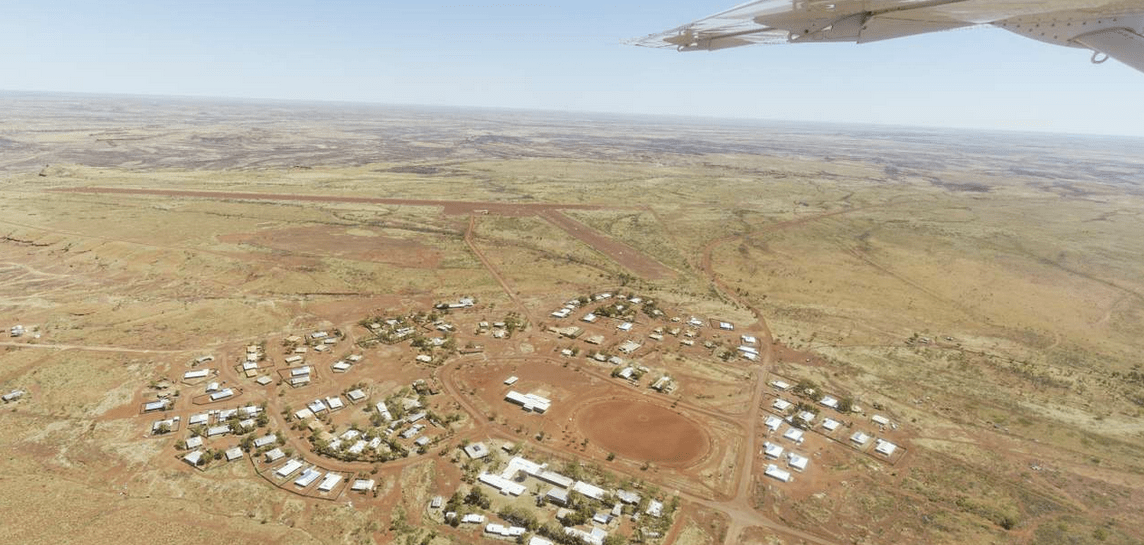
I spent two days with the Australian government’s Remote Air Services Subsidy, or what is fondly known as the mail plane, hopping around the vast and truly wonderful Kimberley, before driving on corrugated roads to its outermost reaches to see for myself how reliant families, farmers and everyone between is on the weekly mail run…

You’ve got mail, Good Weekend magazine, 17 September 2016

There’s no postie on a pushbike out here. For far-flung communities in Western Australia’s huge Kimberley region, letters, supplies and even exam papers arrive only one way – by air.

“There’s plenty of space to get along if we argue,” says stationhand Otto Weisenfield, turning to his colleague Michael “Chappy” Chapman on the ochre earth of the landing strip. “You have that half a million acres and I’ll have this half a million.”

He is not exaggerating. During the wet season – about six months from November until May – he and Drysdale River Station’s Tourism Manager are each other’s only company on the vast, remote cattle station in Western Australia’s far north Kimberley region.

Once a week, their social interaction doubles with the five-minute visit of the Remote Air Services Subsidy (RASS) pilot. Better known as the mail plane, the run is a throwback to the not-so-distant days when Australia Post could afford to send its own small aircraft to the rust-coloured and jungle-surrounded airstrips that dot Australia’s farthest reaches.

Drysdale River Station is one of 366 communities around Australia whose livelihood now largely depends on the subcontracted service, which covers essential passenger trips and the transport of post, goods and medical supplies.

To get there, we’ve taken three planes from Sydney. Leaving Kununurra and heading north, within an hour the only sign of life 3000 feet below our Cessna Caravan is our tiny, fuzzy shadow. There are no roads, no homes, no water tanks. Even threading cattle tracks and termite mounds the size of phone boxes have given way to tawny smudges as we sit at eye level with dusty, lilypad-like puffs of cloud and hum north towards the Timor Sea.

Banking left and steeply carving towards the ground, we circle over a handful of tin roofs to signal our arrival before landing a kilometre or so away from the buildings and coming to a swift halt on the deep red, stony earth. It has taken just over an hour to fly what takes nearly seven to drive on pockmarked, corrugated roads.

Our next stop is 10 minutes away by air, or an hour-and-a-half by unpaved road. At Theda Station, Megan and Brandy Jones meet our plane at the property’s neatly-clipped airstrip, where the temperature is in the high 30s. The daughters of a roaming cattle musterer, the teenagers have no phone or internet and have always been home-schooled. Today, the pilot brings their exams, the oversized envelope 2000 kilometres from its starting place in Longreach, Queensland.

“We are prepared,” says Meg, 15. “I’ve been going on with other units and waiting on this mail. We’ll go back home now and I’ll probably complete this, wait for the mail plane to come back, then post it again.”
Advertisement

She and Brandy, 13, wear matching shirts, denim jeans, Akubra hats and boots. Their miniscule classroom sits at the end of the bedroom in one of three trucks that form the family’s road train, which travels following mustering jobs for about eight months each year. Its walls are pasted with school sums, horse posters, stickers and maps. For now, university is “too far ahead to think about”, they giggle in unison. But it is not all work. Also in the mailbag are letters, movies and magazines from friends, uncles and their grandmother.

The sisters finish each other’s sentences, a twirling dialogue of excitement and pride in their near-unique isolation. “You don’t need any phones or the internet,” says Brandy. “You just write a lovely letter and send it to Grandma and she loves it!”

Living remotely goes against everything we’ve come to expect in today’s ultra-connected world. But immediacy and convenience are encroaching on life even out here: at Drysdale, a box from budget retailer Target arrives via internet order. At Billiluna, more than 370 kilometres south of Halls Creek on a route that takes us over patches of wrinkled, fingerprinted earth and white ash skeletons of burnt trees, our cargo includes a flat-screen TV, a child’s bike and long rolls of shade cloth.

We may be one of the world’s most urban societies, but our identity is so intimately bound with the land that remote Australians today live with the benefit of a weekly, federally-funded connection with the outside world. Australia’s first scheduled airmail service took flight in November 1922, when Qantas began a run between Charleville and Cloncurry.

RASS services have been operating since at least 1994 and now account for all but one of Australia Post’s remote runs. In accordance with the Post’s community service obligations, letters take priority over parcels – of which internet deliveries have boosted the number. And, cost-wise, using the RASS’s freight service is no small fry at $4 per kilo plus a $25 one-off consignment fee.

“It’s all about reducing the isolation,” says Aviair chief pilot Kevin Lloyd. Under contract to the government, Aviair is obliged to follow an order of importance on their RASS runs: people first, then Australia Post letters and medications, followed by freight, then Australia Post parcels. We may be as far from Canberra as is possible on the continent, but the capital has a long bureaucratic reach.

In 2014, Australia Post initiated a slew of cuts to mail planes, including those that serviced the Kimberley. At Doongan Station north-west of Kununurra, manager Susan Bradley greets the pilot with a cold soft drink as her dog Splat lies on the back seat of her quad bike. “We love the mail plane but we’re very disappointed,” she says of the federal government’s continued efficiency measures, which include the end of paying, non-community-based passengers on the service. A recent $5.9 million boost to the scheme did little to quell the sense of a government that is detached from the needs of remote communities.

“We’re absolutely dependent,” she says. “It is just absolutely imperative for us to be able to put passengers on it.”

It is a sentiment echoed by Drysdale’s Weisenfield. “It’s a bit sad,” he says of the shrinking and increasingly expensive service’s effects on everything from family visits to his rations of fresh tucker – or most of it. “We don’t run short of meat,” he quips with a broad, sun-beaten smile.

Doongan Station’s caretaker, Alan Clay, is charged with maintaining the airstrip; mowing its surrounding grass takes an entire day and he must drive at speed along its length before phoning a 6am condition report into Aviair. During the rainy season, he records the depth of grooves left by car tyres as a measure of how waterlogged the runway is.

A few days later we return to Doongan Station by car to sense the spine-jarring journey on corrugated, river-sliced roads and understand just how far some must travel to reach home. Here, roads take a beating from the elements as much as they do from the ragged 4WDs and odd road trains that pile through the emptiness. Before we leave, Bradley has a final message. “Send my best to Chuck up on the plateau,” she says, the bush telegraph as alive as ever.

A further four hours’ teeth-chatteringly bumpy drive north, we find Lyndsay “Chuck” Baker – a contender for the title of Australia’s remotest ranger – fixing a fence near the Plateau Chateau, his stilted home in the Mitchell River National Park bush. In the oppressive late-morning heat, the ranger tells us of his letters to the Department of Infrastructure arguing a case for passengers to be allowed onto the plane, partly to ease the separation from family for his wife, Jazz, and preschool-age daughter, Bean.
Advertisement

“I have good relationships with everyone in a 300-kilometre radius,” he says. “We all look out for each other. But it’s hard. I’m not sure too many people would put up with the isolation.” His nearest cold beer, he notes with a wry smile, is a 250-kilometre drive away.

Australia’s remote routes mean many hours’ practice for young pilots, not to mention a crash-course in the social rigours of the job. Wednesday’s mail run south from Kununurra to the edge of the Tanami Desert is piloted by Dominic Andrews. Beyond the town of Halls Creek, we land at Balgo, population 460, an isolated community some 1780 kilometres north-east of Perth. Our flight is met by two policemen, who check the only disembarking passenger’s bags for alcohol. “Got any grog, Brenda?” Sergeant Pete Steeger says to the Indigenous woman. The dry community is eight hours from the nearest “full” bottle shop and “grog running” is not uncommon.

“We do what we can; every now and then we get a chance to check and have a little bit of visibility,” says Steeger. “Alcohol is a big Kimberley problem.”

But the police at Balgo are far outnumbered by representatives from the local school, medical clinic, parish, youth and arts centres. They load waiting 4WDs with boxes of medicine and dialysis kits. In the peak of the wet season, when even the plane can’t land, the local shop runs out of money, and court documents and banking operations are all delayed. A delivery of fresh fruit and vegetables usually arrives each fortnight. To supplement their grocery supplies, children fish for bream and hunt for goanna, black-headed python and bush turkey.

The airstrips provide emergency assistance, too. When Malaysia Airlines flight MH370 disappeared from radar screens in March 2014, Doongan Station’s Susan Bradley received a call from authorities asking her whether a Boeing 777 might have landed unnoticed on the strip, not 200 metres from her yard’s meticulously watered bougainvillea. Her instinctively Kimberley-minded first reaction was to wonder how on earth she’d be able to bake cakes for hundreds of unannounced visitors.

But in truth, little is left to chance when life is so isolated. Remote living can be at once cruel and gentle but it is always accompanied by scrupulous planning.

At Theda, we meet a pregnant caretaker whose recent deliveries are mostly nappies. The 24-year-old has a set of options ready should her final week of pregnancy – and RASS plane to Kununurra in time for the delivery – not go to plan. “We always have the RFDS [Royal Flying Doctor Service],” she adds with admirable calm.

Still, it takes a near-crisis for the flying doctors to be called. Ellenbrae Station (which, if there was one, ought to win the Remote Scone Award, so many freshly baked scones march out of its tin-roofed, open-sided kitchen in the dry season) has been scratched from the plane’s route this week. After breaking his leg, the property’s manager had driven himself for more than four hours on unpaved roads to Kununurra – and changed a tyre on the way – before being flown to Perth for surgery.

As we fly from Faraway Bay – its name an understatement as it sits perched on the edge of crocodile-infested waters of the Timor Sea – towards the quiet cattle shipping port of Wyndham, a bushfire stretches into the distance, its white rim a wide, fizzing bite mark. “That’s a tiddler,” says chief pilot Kevin Lloyd. “You get used to what’s normal.”

Like many, the Kiwi pilot loves remote flying for the characters he comes across, the terrain he traverses and the daily oddities that pepper his shifts. Among constant packing and unpacking of the Cessna Caravan’s cargo, logging passengers and seeking traffic advisories, Lloyd has the spectacle from his cockpit to keep him company. During the wet, he steers around lightning and great, dark columns of storm clouds.

His colleague Dominic Andrews dreams of air acrobatics, and after also training on the “half as long, half as wide and surrounded by mountains” runways of New Zealand, the Kimberley’s wide expanses look easy. We fly at 300km/hour over the landmarks he has come to know so well: the ever-expanding and -contracting Lake Argyle, the 600-metre deep Argyle diamond mine, the tin roofs and rusting car yards of Turkey Creek.

As we criss-cross the land, from sandalwood plantations to snaking rivers, scorched bush to the soupy, cappuccino mud of the Cambridge Gulf, there is not a soul below us who does not depend, for some months of each year, on our small craft and its vital, inter-community hops.

Back at Theda’s mustering camp, Megan and Brandy’s mother Annette Jones, who doubles as camp cook, feeds up to a dozen men three times a day. Her daughters tend to the poddy calves and dogs, but school is their priority, even in the middle of the Kimberley bush. Their father, Andrew Jones, is a fifth-generation drover and revels in being shielded from the news of the outside world, even if it comes at the cost of wrangles over the distance education of his daughters and their unusual upbringing, devoid of peers.

“I reckon we’re normal, but what’s normal?” he says, wary of the vagaries of modern life. “We’re very protective. Eventually the girls are going to have to go but I don’t think they’ll go too far.”

He has watched communities close and the pull of the city’s bright lights drain the verve from once-lively remote areas. Two satellite phones and the mail plane are all he and his family have to connect to society when on the road for eight months of each year.

Today, the girls have stopped school for an hour to meet the plane, and tonight, they’ll work longer to make up for it. Tomorrow, they’ll do the same if their father needs help mustering.

“That’s the beauty of doing this, you can stop and you can have a smoko,” laughs Annette, “or stop and get the mail.”

Read the SMH’s far more beautiful version of the story here.

Standard
Uncategorized

Australia’s $1 billion debt

European countries that refuse to take in their proportion of forced migrants will face a financial charge of about €250,000 per refugee, according to Brussels’ plans to overhaul the bloc’s asylum rules.

That’s about $400,000 per person.

Given Australia today has 30,037 people seeking asylum (according to the Asylum Seeker Resource Centre), it would be forced to pay $11.59 billion to the international community.

Let’s be more generous and imagine the government is only forced to pay for those 2437 individuals who find themselves in detention centres on Manus, Nauru and across mainland Australia.

We’d owe our more generous neighbours nearly a billion taxpayer dollars.

Standard