Blog

Apricots // 2 Dec 2012

The TV is bringing news from Homs.

It is not good. It never seems to be, these days. She shakes her head, wrings out the dishcloth and folds it over the cold metal of the sink’s edge. Her nail polish, she notes, stirring the young jam – as the news anchor reels off a dark roll-call of deaths, bombs, Assad dissidents and maimed women and children – is chipped, a blander colour will be better, next time.

She can hear children playing in the distance, the hum of a car engine, the white noise of well-to-do suburban life. The afternoon sun catches her engagement ring, notched, filed down with the scratches and bumps of her years.

Her Syria had been a different place. Dark and angry, perhaps, but only to her and those who dared to question. Spring was a season, not an uprising, Hama, just north of Homs, was a town quietly mending itself, removing the splints from its own fractured past – a place where concrete trees sat alongside silent merry-go-rounds, waiting for life to trickle back into the play-parks and night markets and for real, green shoots to take root, to ramble over the pain of 1982.

It was just two years ago, almost to the day. Madoff had stolen her money. She liked the irony of his moniker – Bernie made off with her life savings – it gave the horrible, terminally disappointing affair a sneeringly sardonic edge, reluctant as she had been to acknowledge the clogging weight of her sadness.

She had gone to the Middle East to forget. To cloud her memories with cloying Omani frankincense, to scrub and scrape the layers of folly – a four-year-old knows how to diversify, for god’s sake – away with rough Turkish bath cloths, to close her eyes and be swallowed by the dark depths of unquestioning Dead Sea mud.

She’d tried listening to Eckhart Tolle, willing the man’s gentle humility to infiltrate her jaggering, all-pervading – and far from dignified – reactions. She wanted to let go of the hate, the tortured regret, the anger, but try as she might, the Germanic, ordered lull failed to permeate. She tried exercise; Janine had signed her up to the brazen Zumba classes at 24-hour Fitness. As much as she wanted to give in to the deafening music and bizarre air pumping, it wasn’t for her. She even sat down in front of a handkerchief of green felt, attempting to surrender her concentration to bridge classes. But North meant looking across to South, and South, to her, meant Wall Street. West was the World Trade Center site and East – eastwards led her to Syria.

Tolle would be pleased here, she thought, as a muezzin bumped his holy microphone, flooding the morning air with a brief haze of static. The devout of Aleppo dutifully made their way to their local mosques, every prayer call a reminder of the now; every day neatly split into chunks of present. With each unrolling of a prayer mat came another window – just a few hours – of redemption. No room to fixate on much else. But they’re all looking forwards, or backwards, too, she thinks. We can’t help it.

There may be no future, but there is hunger, she says to herself.

‘Excuse me, madam?’

‘I’ve just realised how hungry I am,’ she tells her guide with a wide smile, embarrassed at her self-indulgence. Here he is, trussed up in his Western shirt, neatly ironed, his side-parting glossed and rigid. He was recommended by Janine’s sister who has a friend who worked at the embassy in Damascus, but still she found it hard to trust the man, his dark eyes too deep-set, his manner too earnest to be taken seriously.

Beyond the kitchen window, a car alarm rings somewhere in the distance, towards the parking lots around the mall.

She catches herself smiling, now, as she goes to the glass cupboard, pulls its glossy door open, jingling its sparkling insides. High balls stand to attention next to Champagne flutes, showy red wine glasses take up too much space. She wipes each rim as she sets the crystal down, its footprint waiting in the dark. She moves to the cupboard below, grips the solid, weighty glass of an empty jar and brings it into the spring light.

Hama, she remembers, was chilling. Homs was awake to change, but it was Aleppo that beguiled her, that stole her self-pity. Ba’athists had not boiled its character down to life or death.

She listened, in the gnarled souk, to her guide tripping over his new-found English, finally forgetting herself, her lost thousands, as she sank further into its epic, crepuscular story.

‘Theses streets have been constant-ily lived in for around 7,000 years. Since fifth millennium bee-cee.’ He jolts at the end of each sentence, like an out-of-breath sprinter with a microphone pressed into his panting face. Before Jesus, before New York, before Madoff. Before the East and the West and continents and maps. Before families and marriage and law. Before it all.

She excused herself, apologising, and wrapped her new shawl closer to her head, breathing in its dusty, haggled-for camouflage. She has a hunger she hasn’t felt since youth.

‘I could eat a horse,’ she says, emboldened, out loud.

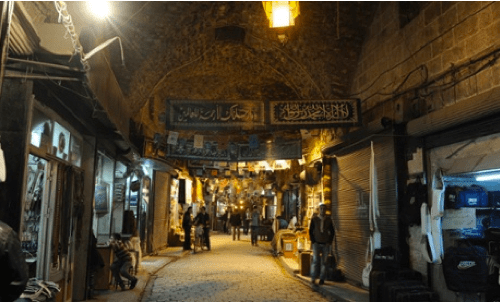
It’s dark under the metal roof of the meandering lanes, cramped, loud, uneven under foot. She is a white pillar in a sea of black shrouds. She looks around for somewhere to eat.

Tea is being poured, streaming from a stainless steel pot a foot above the tiny glass. Small stools, their puffy pillows coated in clear plastic, are huddled around upturned crates, silver discs perched atop their wooden lattices. Strip lighting hangs above pyramids of oranges, apples, watermelons and bunches of spiky mint.

‘There’s an Arabic saying’, her guide had earlier told her as she walked past a domed heap of dried fruit, ‘that goes, buchra fil mish mish.

‘It means: tomorrow there will be apricots.’

‘Apricots?’

‘It means it might not come – insh’Allah. I think in English you have something similar: bigs will fly’.

Pigs might fly. If it sounds too good to be true, it probably is. She is resigned to that, now.

She can’t speak much Arabic. A bearded man, plump belly pushing against stretched cotton, focuses on her, unsmiling, distracted, seeing through her. She smiles, points to the stacks of bread being delivered from a cart in the teeming alley.

Chai, min fadlak.’ It’s all she knows. So far from her usual world of two-car garages, coupons, driving ranges and tumble-dryer cloths.

There are no spare stools. She perches on a step in a doorway, thousands of miles from home, broke. Earthquakes, Saladin, the gateway to Palmyra. Medieval fortresses and recipes unchanged for centuries. War and extremism. Broken families, new jobs, car accidents, infidelity, robbery, lottery wins: Context is everything. Time throws a finer focus onto what counts.

Ten eyes are squarely focused on her body. On her femaleness, on her breasts under her fine cotton shirt, on her mascaraed eyelashes, on her sandaled feet. Her milky white wrists and the wizened ring.

Like the skin on setting jam, she is cocooned by the shield of her scarf, by her foreignness, by the Ponzi scheme. Nothing, she realises, will touch her.

She is served. Shokran. she is impermeable, she has decided, to their stares, their lazy daydreams.

And there it is. A green plastic plate, a smeared glass filled with sweet mint tea. A white curl – so bright and luminous it seems utterly at odds, lost in the fetid grind of the great souk – of fresh, stretched curd cheese. A dollop of brutishly alive apricot jam sits on its edge, like a bruised, sun-warmed harvest straight off a heavy tree, and teetering above is a swollen khobes bread, ready to burst with relief and spill its burning steam.

She eats the bread, cheese and jam. She eats the fruit, grain and animal. She has one glass, two, three of tea. Her mouth wraps around hot, cold, salt and sugar. She bites on a history, eats a civilisation and chews, systematically putting away her old life, swallowing her indignation.

‘I’ll tell you about your father’s travels one day,’ she remembers her Bath-born mother once saying, as she carefully measured pounds of sugar and bleeding fruit for jam-making. ‘He was a dreamer, a special man, but he never was clever with money. Wasted more than just himself. He wanted the world for you.’ Did he walk through Aleppo’s labyrinthine layers, did he step into a David Roberts painting, did he move and spend to forget? She still asks.

It’s getting dark now and cars have pulled into driveways. Shrieks and basketball hoops have given way to evening meals around polished wooden tables. It’s not the home she thought she’d end up in, the crystal is not hers, the prim pathway does not lead to a place that she owns.

Her batch of jam has thrown steam to the sides of the cool, clean jars and is now covered with leaves of wax paper. It sits, waiting, beneath tightly closed lids. She doubts that her son will chose to eat it alongside salty, fresh curds, she wonders whether his children will remember it’s their great-grandmother’s recipe. She prays, teat-towel in hand, that Aleppo may never change.

The front door slams and the TV is switched on. The bad news from Syria hasn’t ended.

(Written in April 2012 – before Aleppo was almost entirely besieged and its souk burnt out, belittled and all but ruined.)
Standard
Blog

King’s horses and King’s men // 1 Dec 2012

You know what I mean. The time you fucked up. The time you fell. The time, as you’d say, you dropped the ball.

We thought you were something more. We thought you were different.

I know there was more than once!

But I think you and I both know what I’m talking about.

You can remember it very clearly, like a cold day on the beach when the stinging water is warmer in than out. Running out of the waves, onto the beach – it’s sharp, it’s not so easy to blur, I think you’ll find.

So we’re on the same page?

Good. You’re there. I’m there. She’s there. They’re there.

You leapt.

You blamed it on her. You said she was crazy, a stalker.

You took us all along for a ride. You regretted it – or, at least, you pretended to.

There were your tears, on the side of the bed, landing somewhere in the no man’s land of your conscience. God, what a dark place that must be.

Crocodile tears. Strange, that. Do those prehistoric beasts cry? Ha!

You’re wandering.

Come back. Yes, good.

You’re there, I’m there, she’s there.

The radio played the one you like. You know the one I mean. We danced when you met her, you tried to impress her with it.

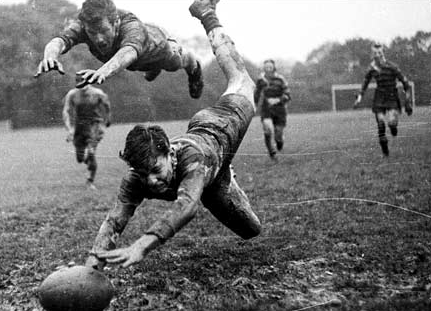
Remember when you broke my nose playing rugby? Your knee, supporting something far less empty back then, slammed into the crunching bridge.

Two black eyes… It bled, hell, it bled for hours. Dripping into milky, sweet tea.

The iron, the bitterness, the warmth.

What did you say to her when she left? What made her fly? Did you ever ask when she’ll be back?

The ball bounced, egg-shaped, awkward, drunkenly lurching, left and right, off the pitch, down cobbles, bumping. Steeper, faster.

A tree branch, a rock, half-submerged in mud. A beer can, faded and rusty. A tangled root, torn, soft, weeping, pale golden flesh exposed.

It fell. And it fell and it fell and it fell.

It passed them all.

You didn’t stop to pick it up. You didn’t even try – it was too far, you said you couldn’t reach.

Humpty Dumpty sat on a wall. And you – you hurt us all.

(2 July 2012)

Standard
Portfolio

A love letter to the old Syria, Sydney Morning Herald // 2 August 2012

My piece from the Sydney Morning Herald, today.
Another time ... memories of Syria and Damascus.
Another time … memories of Syria and Damascus. Photo: from the Dumas archives.

In a corner of the old city of Damascus, along the Street Called Straight and beyond Bab Sharki’s backgammon set

hawkers, lies a convent.

There’s no diplomatic immunity, emergency plan or security company executing an abort strategy for its nuns.

Instead, they pray, talk quietly and make fresh apricot jam, alive with the Mediterranean heat from the trees that

droop, heavy with fruit, in the fields around the city each summer.

Their country has become part of the lexicon of global disaster – a repeated newsline that gathers pace, bodycount

and bloodshed with each passing day.

Syria has escalated into a full-blown civil war, pitting Baathists against the rebellious: those who have, for too long,

been silenced.

It’s a newsreel I – we – understand well, given the region, but it’s a Syria I don’t recognise.

Eighteen years ago, I moved with my family to Jordan, neighbouring Syria’s southern border. My aunt and uncle

had lived in Damascus for years, having been forced from the mortared, shrapnel-littered streets of Beirut in the

1980s and, like him, my father was sent to work in the region as a British diplomat.

We landed in Amman on a heady, jasmine-scented summer’s evening and plunged, headlong and en masse, into

a love affair with the Middle East that refuses to dissolve.

It’s a region of olive trees, musky incense and rambling, dark souks. Embarrassingly generous people, social

awkwardness and intense, unspoken and oft-misunderstood inequality.

Shrill muezzins on crackling speakers pierce the frenetic din of car horns and local, warbling pop; camels share

roads with battered taxis, dusty sheep and Toyota pick-up trucks. Censored Hollywood films play in city centres – and uncensored films play in gated, guarded mansions’ media rooms.

Before I started my first day of school in Amman, clad in long, scratchy trousers and an oversized collared shirt in the

stifling late summer heat, I imagined classes of teenagers with sandals, sheltered from fashion and Nikes. How wrong I

was – that eye-opening day, aged 14, was the first time that I understood how the Third World was no different, in

many ways, to the first. Vanity, like fear, has no borders.

We visited Syria and Israel often, switching cars and removable pages of passports to circumvent the diplomatic

faux pas of entering occupied Palestine with Syrian visas.

To us, Damascus was an old friend – but it had an intense religiosity too. We always stayed at that ramshackle

convent with its high ceilings and echoey, tiled, dark corridors. Pious, hunched nuns hovered down the long,

polished passages, eyes-down, and breakfasts were plates of sparklingly fresh, salty white cheese paired with

their apricot jam and steaming, pillowy hobbes bread. Sweet mint tea and bowls of oranges made up for non-existent

plumbing and the clunky, never-ending whirr of ancient ceiling fans.

Hama was a quiet place, carrying the weight of painful memories and not ready, in the mid-nineties, to remove the

splints from its shattered past and the 1982 massacre. Its empty play parks, nappy-filled riverbeds and concrete

“trees” – a peculiarity of the Middle East – eerily closed for business.

Aleppo, the great, great, grandfather of cities, beguiled me as it has beguiled for ten thousand years. It is the only

place I have ever felt truly, deeply violated and belittled for being female – but it is also the only place I have ever felt

so swallowed, so sublimely humbled by history – two of life’s more perspective-heavy lessons in solipsism. As

government troops meet the Free Syrian Army in streets that have seen more than their fair share of mens’ tears,

the gloomy, garrulous desert grotto that is the souk lies quiet, its clamour and jarring, almost bestial lifeblood

temporarily on pause.

We heard stories of the Big Brother ubiquity of the mukhabarat, the secret police, and we learnt – as we had been

taught before arriving in Amman – to go delicately, be diplomatic, stay quiet. The Assads were never going to last.

It’s a wonder life has limped on for this long under the family.

“Chai, Sir. Play backgammon, Sir”: Carpets, frankincense, battered taxis, poorly painted effigies of Assad on street

corners, at the entrance to souks and carpet shops. As those pictures are fought over and torn down, so must the

stranglehold of 41 years.

I wonder now what those salesmen are doing, whether they have underground bunkers with creeping wires looped

towards the open air and TV reception.

I think I know, as I remember those nuns, quieter than church mice as they shuffle along the convent’s stone floors,

what their prayers must be.

Standard
Portfolio

Bogans, bashing, rorts and stoushes // 20 June 2012

My piece for Daily Life, 20 June 2012…

——

So, bogan is actually a word. A bona fide, fully certified, 100 per cent pure, paid-up, proper word in the actual Oxford English Dictionary.

Well, it’s about bloody time. Deliciously peculiar to Australia, the word is a sublime moniker for a social stratum of a nation that loves to pretend it is classless and blind to social snobbery.

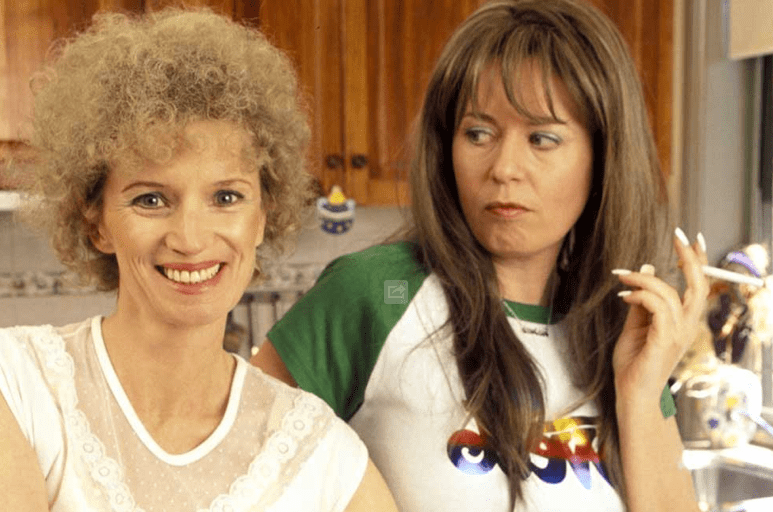
As much as we may revel in pointing the finger and having a good laugh at the Kath & Kims amongst us, bogans are our siblings, cousins, colleagues, best mates and worst enemies. Their hair is questionable, their drinks are predictable and you could wager your annual income on their footwear choice. Like lime green utes, bogans are a species native to these fair shores and these fair shores alone.

But, like it or not, it’s become an unstoppable export, too, the word bogan. Close cousin (legal or otherwise, as the case may be) to the English chav or the American redneck, bogan is instantly and simply translated when it comes to other English-speaking cultures. Married, in the international conscience, with another great export, Fosters, bogans are immediately recognisable on the world stage by the national dress of thongs and singlet. (As an aside, sausage sizzles are surely a contender for a national dish?) The truth is that overseas, bogans are part of an unhelpful stereotype so unhelpfully perpetuated by none other than the mandarins behind Lara Bingle.

But it strikes me that bogan is an acolyte worth celebrating, too: It is a word, new or otherwise, that is a proud part of ever-evolving Australian English.

It sits aside a group of words that I had never come across until I moved here from London two years ago. Words that here, for whatever reason, have been given place on a stage and have elsewhere faded – and of that important slither of colourful linguistic diversity, Aussies should be genuinely grateful.

So, bogan, you are nestled amongst a host of Antipodean beauties. To wit:

Stoush – This should, I can’t help thinking, be pronounced ‘stoosh’ but has somehow wound up with far harsher (and thus more to-the-point, I suspect) phonetics. No other politicians in the world engage in stoushes with the opposition, in the same way that no other international leader would say “Delegates, in these coming days I want us to have a fair dinkum Labor Party conference.” They just wouldn’t.

Rort – As in, rip-off or defraud. Again, an onomatopaeic word (and again, a word that seems to be associated with politicians) for something that is horribly unfair – its meaning is as ugly as it sounds.

Doona – An oldie, but a goodie. A two fingers up at the finessed Frenchness of duvet. Not sure of the etymology of this one, but perhaps related to down, as in feathers?

Spruik – My personal favourite, and now that I have discovered this gem, I wonder how I survived without it before. I suppose we pedal or our wares in the UK? A stand-up comedian friend of mine used to canvas for business (?) and market (?) his tickets outside venues in England – and he’d be the first to admit that it came across as, well, a little desperate. At Melbourne Comedy Festival he was out and about spruiking… and his eccentric sales technique was suddenly, totally, brilliantly, acceptable.

Bash – Granted, ‘to bash’ is common the world over, but I haven’t come across it in the formal setting of news coverage before. As in, “a vulnerable young man who had already been bashed once in detention was bashed again in another facility”. It’s a tricky one to pull off for an adult newscaster and not to be attempted on BBC Radio 4.

And there are many more where those came from. (Not least, a whole lexicon of farming and cattle terms that merit their own thesis – something I don’t dare dip my toe into here.

Note that all of those words are short, unfussy, harsh-sounding – even a little clunky – and heavy on the dipthongs that Kath & Kim are so darned adroit at exploiting. These aren’t verbs and nouns that are trying to be elegant, polite or delicate. They’re ballsy and brave and unapologetic. They belong.

And they sound far, far more effective when delivered with an unsullied bogan accent from the window of a moving, lime green ute. Or in Prime Minister’s question time.

—-

And two other pieces for Daily Life…

How to: Get dewy looking skin

Too close for comfort: Are shaved heads finally acceptable for women?

Standard