
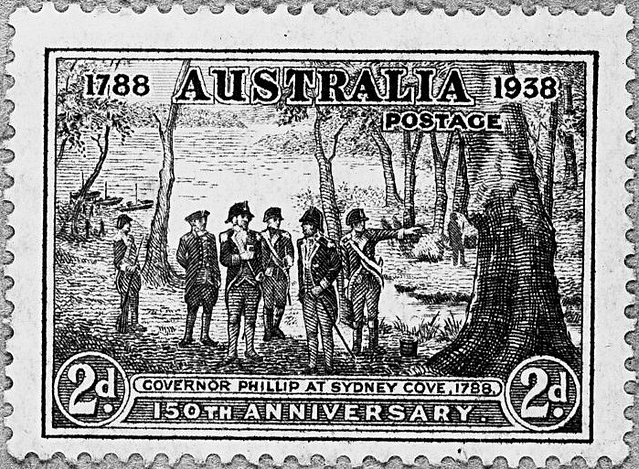
The obituary of First Fleet member, convict and builder, James Bloodworth, birth date unknown, died 1804. Published in the Sydney Gazette, 25 March 1804.
Update, 20th April: I have just learnt from a historian at the ANU that James was sentenced to seven years’ transportation in 1785 for stealing one game cock and two hens. Food, or bounty, for thought.
“On Wednesday last died, generally lamented, Mr. James Bloodworth, for many years Superintendant of Builders in the Employ of Government.
He came to the Colony among its first inhabitants in the year 1788, and obtained the Appointment, from his exemplary conduct, shortly after his arrival; the first house in this part of the Southern hemisphere was by him erected, as most of the Public Buildings since have been under his direction. To lament his loss he has left a Widow and five Children, the youngest an infant now only one week old; and the complaint which terminated in his dissolution was supposed to proceed from a severe cold contracted about two months since.
The attention and concern which prevailed at the interment of the deceased were sufficient testimonies of the respect with which he filled, and the integrity with which he uninterruptedly discharged the duties of a Public Trust during so long a period. His Excellency was pleased to order that the Funeral should be provided for at the Public Expense, and to show other marks of attention to so good a Servant of the Crown.
Four in the afternoon of Friday being as the wish of the widow appointed for the Funeral, the Relics of the deceased were at that hour removed from his house in South Street, and conveyed to the place of interment, attended by a great number of friends, among whom were most of the Sydney Loyal Association, in which he had been appointed Sergeant.
Opposite to his old residence a Procession was formed, which moved in the following order.
12 of the Loyal Association, arms reversed
Sergeant of the Association
Drum muffled & Fife
THE BIER
Two Sons, chief Mourners followed by an Infant Daughter,
Fourteen Female Mourners,
Twenty-four Male ditto
A number of respectable inhabitants in Rank
The Non-commissioned Officers of the New South Wales Corps
And a crowd of spectators
When near the Burial Ground the Association were obliged to file off, for the accommodation of the friends of the deceased, and the populace, who were become very numerous; and when the remains were disposed approached the grave and performed Military Honours.”
Cited from Obituaries Australia.

 daisydumas.com