Blog, Portfolio

Greenhouse by Joost: all that glisters is not green // 1 March 2011

In a country that is home to the world’s biggest houses, roads full of ubiquitous 4×4 utes, a world-famous city that is crippled by its own anachronistically stunted public transport network and voracious tumble dryer usage even on 30C days, green concepts have a long, steep hill to climb before hitting mainstream palatability.

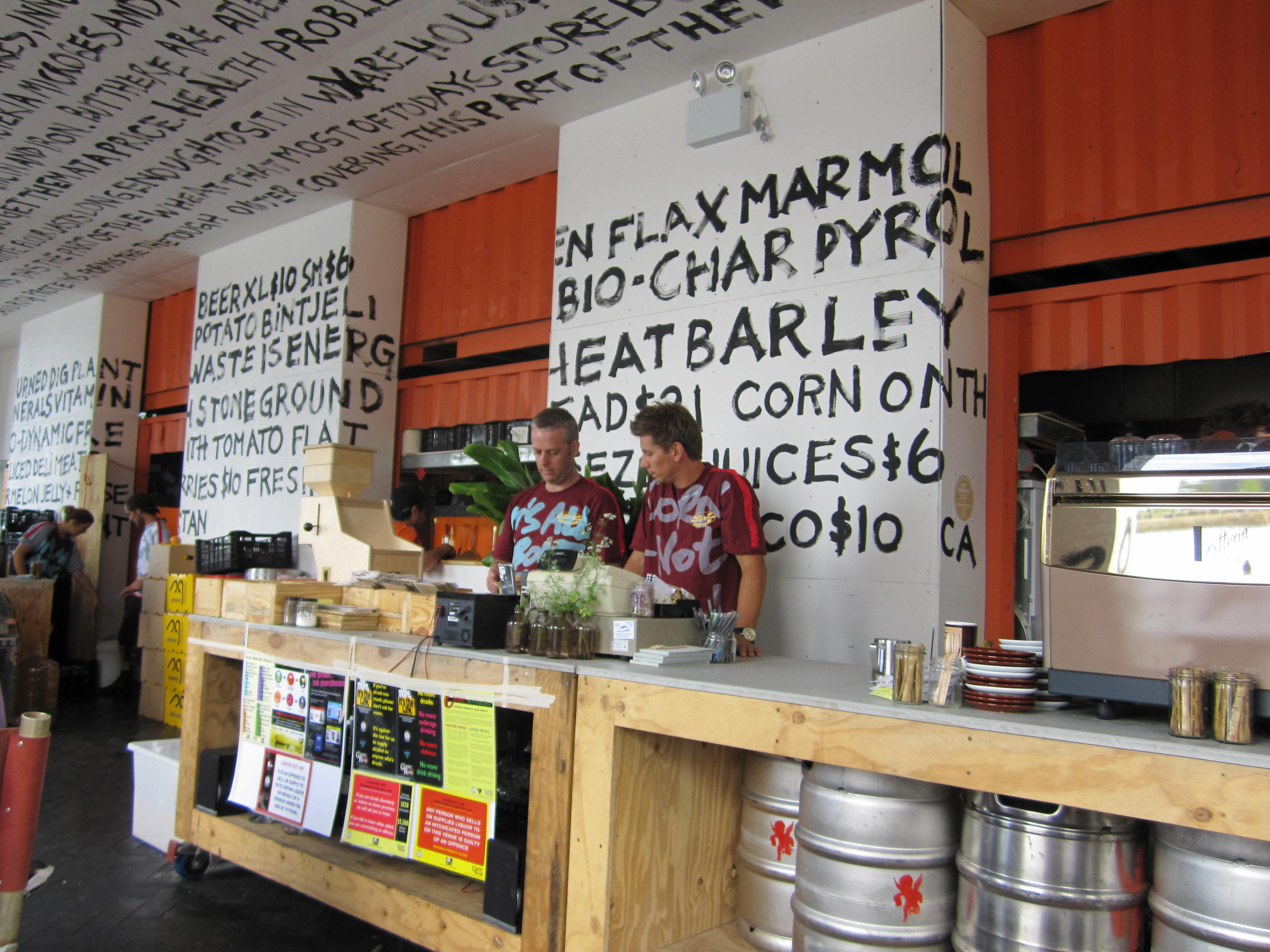
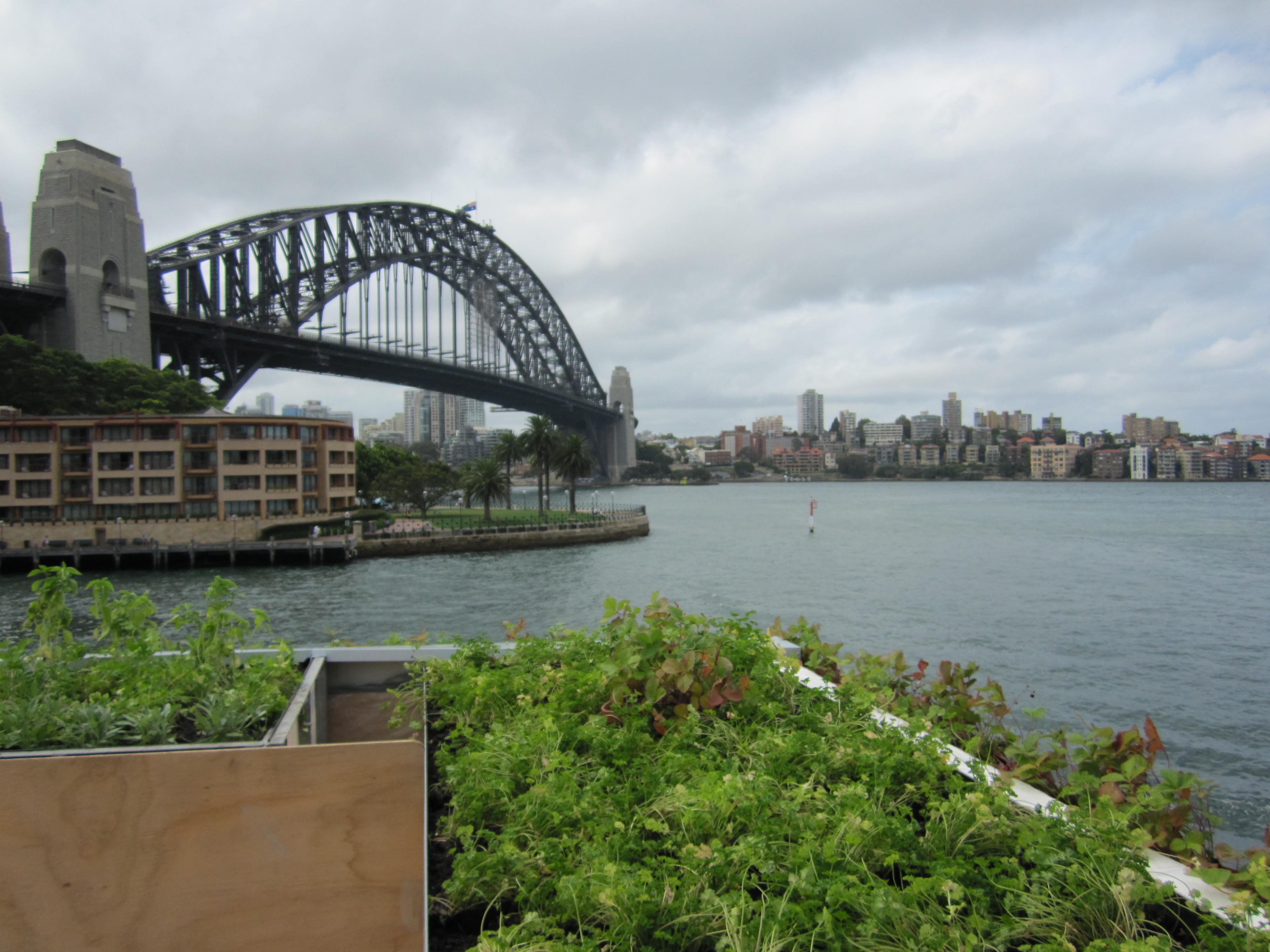
So, it is no mean feat that Greenhouse by Joost, a pop-up eco restaurant sitting bang in the epicentre of some of the most globally famous and eye-wateringly expensive real estate known to man, is setting a few tongues wagging here in Sydney. It helps that the temporary structure is covered in plants, is eye-catchingly rustic against the anathematic glass backdop of (uber fancy) Quay restaurant and is the inadvertent limelight stealer in many a tourist snap of the enduring Trifecta – ‘harbour, ‘bridge and ‘house.

Londoners are lucky to have the brilliant Waterhouse and Acorn House eco restaurants in their midst, as well as the low-energy Duke of Cambridge, Saf and Clerkenwell Kitchen. Those eateries, however, aren’t housed in a glorified (but very lovely) outhouse that is a salutory call to energy-hungry Sydneysiders to try to spare some thought for the environment the next time they switch on the A/C. Joost is a brave man.

The building is made of salvaged everything. Glasses are jam jars and flowers are from the rooftop gardens. Chairs are made of reclaimed metal tubing and plates are chunks of plywood. There are no rubbish bins and all waste is composted. Cutlery is wooden and there is a little demonstration oat mill to play with. It’s a big, bright, bustling space and the view is, well, it’s pretty damn phenomenal.

But what Greenhouse makes up for in novelty it sadly lacks in a menu that didn’t cut the proverbial organic mustard for me. Although the oysters, cured meats and olives were spot-on the meal sadly didn’t live up to the view or the experience. Herbs from the roof, flour milled on site, pasta, bread, the whole shebang, made in the temporary kitchens is all very well and good – and I love the idea – but the bread was tasteless, the bumpy pasta lacking punch and the pizza dotted by crunchy disks of anaemic potato and not much else besides.

The focus, I suppose, should not be on the food but on the premise of the place – it’s here to send a message and to that extent, it’s done well. Or so the smiling waitress up near the loos must surely feel – I heard her explain to each loo goer upon leaving the trestle-table-for-door loos that yes, the tap is working fine, it is supposed to keep running to give you a sense of how much water goes into each loo flush. Sydney, though, is a city of food-lovers and green goodness alone cannot fill a stomach.

Like any good novelty, its days are numbered. It’s worth a visit if only to try the home-made (but soon to be marketed) gin, but more to the point, it’s worth a visit to see what can be done with a bit of lateral thinking and some wild strawberry plants. And all within a city in which it is impossible to find a streetside recycling bin, where the car always takes precedent and where clothes-laden washing lines are as rare as hen’s teeth.

 

Standard
Portfolio

Violent Light, Agenda Sydney // 21 February 2011

Polish your cultural halo this Friday night by dipping into the sunlight-infused film works that make up Sean Rafferty’s Violent Light.

Housed at the arthouse Chauvel Cinema in Paddington, Rafferty’s convention-defying mix of cinema and fiendish light trickery replaces the traditional movie screen with a cardboard canvas, and experiments with sunlight, cinema projections, landscape and memory. The cinema-and-gallery installation is a one-night-only production, and it’s also a cheap date – that is, admission is free, so bring your struggling artist friends.

The five-minute film focuses on an outdoor cinema screen over the course of a day. As the day fades into night, darkness brings with it a film within a film – or as Rafferty puts it, a “junk-film montage” made from projectionists’ clippings. Rafferty says it’s “an artwork about cinema and optics, memory and the ‘physicality’ of light. It is about landscape, its representation, and its residual effect – how we project things onto the landscape and it projects things onto us.” Who are we to argue?

Armed with a drink from the mezzanine bar, absorb the inspirations behind, offshoots of and by-products of Violent Light before heading into Cinema 2, where the short film will be shown.

As the week fades into the weekend, there aren’t many better ways to kick Friday night into action – beer in hand, surrounded by new art in the old grandeur of the Chauvel.

Or, read my piece in today’s Agenda here.

Standard
Portfolio

England celebrate after historic Ashes win over Australia, London Evening Standard // 7 January 2011

England cricket fans started a 24- hour party after ending 24 years of Ashes hurt by finally beating the Australians in their own backyard.

Players joined the thousands of members of the Barmy Army who witnessed the final stage of the devastasting 3-1 rout of Australia…

Read the rest of my piece in the London Evening Standard newspaper, or see pdfs below.

Standard
Blog

A short introduction to ocean swimming // 8 January 2011

If there’s one thing my four months in the golden land has taught me so far it is this: when an Australian says a sporting activity is just ‘good fun’ and that they are ‘unfit, will come last and haven’t done any training’, they are lying. Fact.

How can I be so sure? The Newport Ocean Swim on Sydney’s northern beaches is how.

That life’s great gamble, the geographical lottery of birth, means that simply by being born in Australia is an advantage when it comes to swimming prowess. If you’re born on the coast, furthermore, you can handle waves and are probably on familiar terms with a surfboard. And if you are one of the four million jackpot winners who comes from Sydney, you know how to ocean swim, laugh at waves and look sickeningly good after running from Bondi to Bronte at 6am. All facts.

Now that I have got that out of the way, I can introduce Londoners to the sport of ocean swimming. And the verging-on-stupid undertaking to which I found myself committed on the 2nd January.

Let me set the scene. A beautiful summer’s morning dawns in inimitable Sydney style, self-satisfyingly clear and mockingly perfect. A neat, golden beach arches between rocky outcrops, fringed by empty holiday pads of the rich and the famous and commanded by the cliquey dominance of the Newport Surf Lifesaving Club. There’s a gentle swell (read scary if you’re more used to Southend-on-Sea) and the water temperature is a solid 20C. A couple of hundred metres out lies a southern star of bobbing buoys marking the 2km race route. I can only imagine that what lies ahead is like a triathlon without the energising distraction of the ‘tri’ component.

I have been signed up to the Newport swim by proxy and without warning. Not only have I never swum long laps, but the last time I competitively raced in a swimming pool was underwater widths against my sisters when I was 10 – that is, barring those horrific school swimming galas of which the less is said the better.

Narrowly missing the start of the race due to a hunt for a swimming costume, I find myself grouped on the beach, surrounded by acres of tanned flesh, most of which is engaged in some sort of stretching. It soon becomes clear that of 500, I am the only girl a) wearing boy’s budgy smugglers b) wearing a bikini top c) unable to put a swimming cap on by myself and d) still morbidly hungover from New Year. I have never swum, properly, in the sea before and someone has just grabbed my arms, yanked them upwards and smeared Vaseline in my armpits. Alarm bells in my head are drowned by the over-enthusiastic blast of the start horn.

In the eternally wise words of Steve Zissou, “Nobody knows what’s going to happen. And then we film it. That’s the whole concept.” In I went.

Now, I’ve never seen a migration of the wildebeest before, but 500 competitive swimmers running and gamely splashing into the sea at speed has to compare, in some way, to the African spectacle. I should know, I was at the back, watching. Which is where I stayed for the duration of the entire hour I spent trying to stay afloat, imagining sharks’ jaws, swallowing salty water, wobbling off course, pathetically breast-stroking and wishing I had slept more since the 31st of December. I was overtaken by four separate fronts of flailing limbs and Spandex and by 1km, I was not even ahead of the 70+ agegroup.

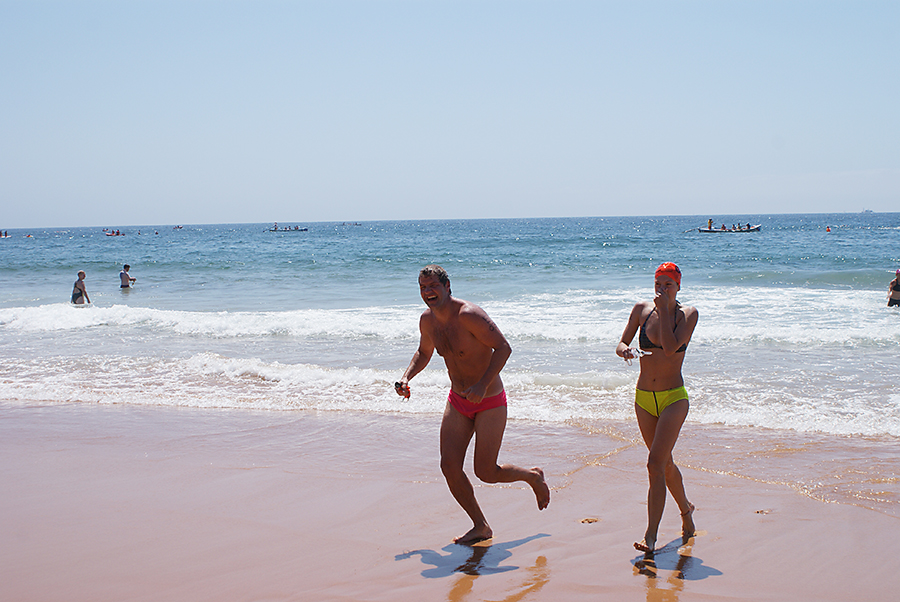
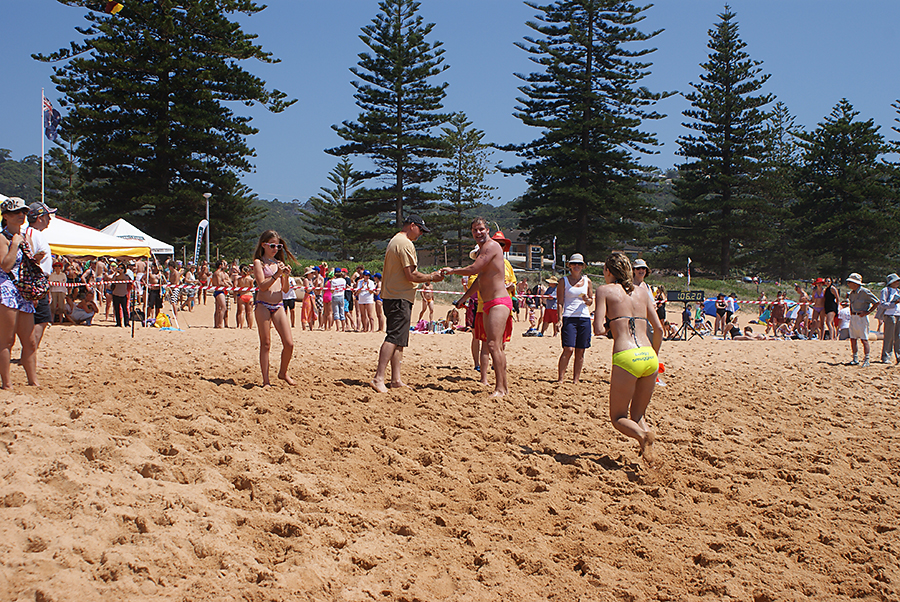
I finished, quivering and knackered, 60 minutes and 23 seconds after I started. But at least I didn’t have to be rescued by a 16-year-old lifesaver on a surfboard. Let the pictures below be proof of me, emerging, unconverted, from the Pacific with a gutful of seawater and a tsunami of abuse coming my way.

Still – and this won’t tire for as long as I am relentlessly reminded of Newport – at least England won the Ashes.

Race pics thanks to Louisa Hawke. Beach huts image taken on the Mornington Peninsular, Vic.

Standard